01 / THE VOYAGE
When vision
loses correction.
A literary reflection by Stardyne on Herman Melville’s Moby-Dick.
Reading notes and referencesA life can gather extraordinary force around a single purpose. What keeps that purpose answerable to the people and the world it touches?
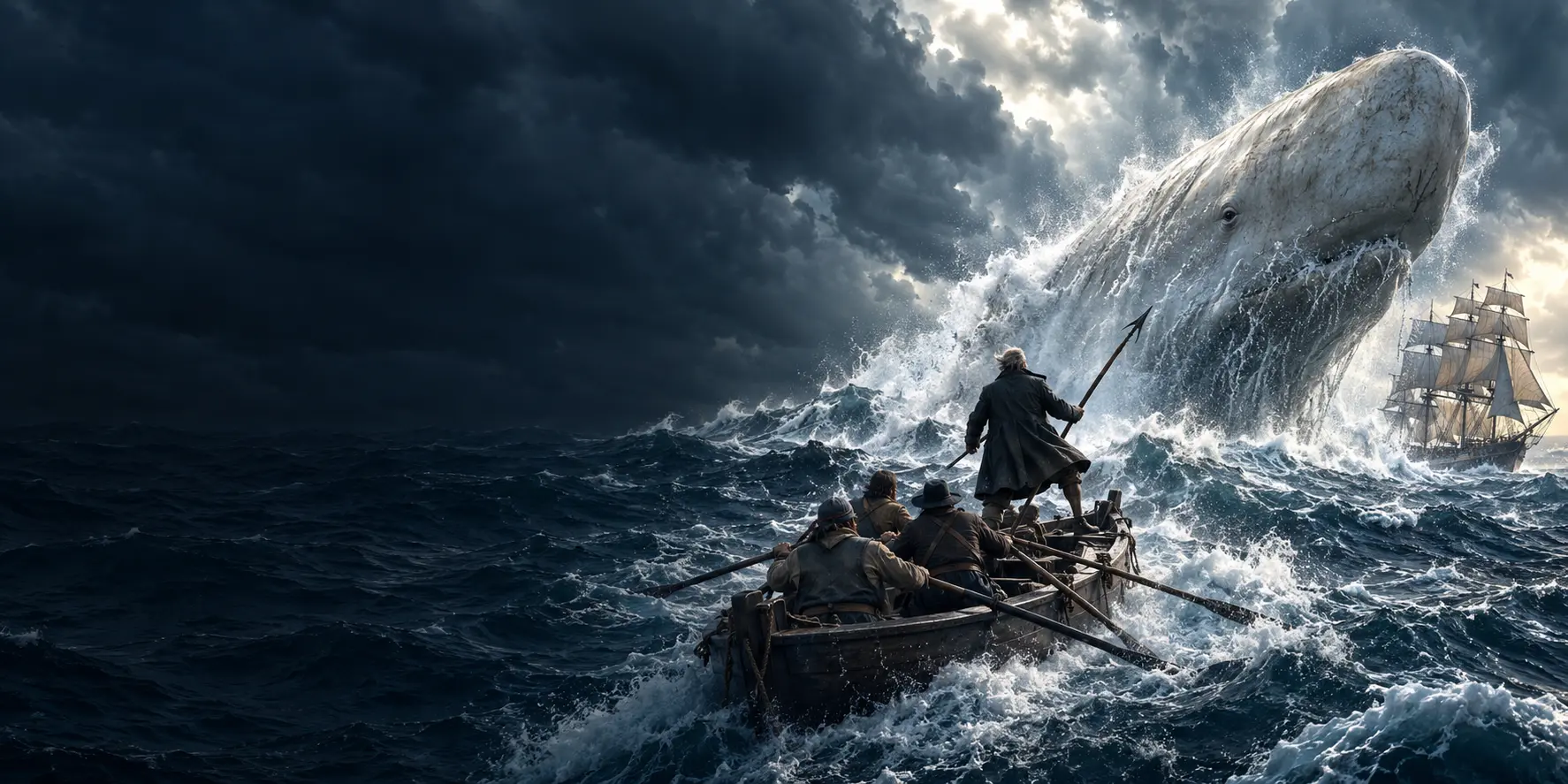
In Moby-Dick, Ahab turns the Pequod toward the whale that injured him. Starbuck challenges the captain’s pursuit of vengeance. Later, in “The Symphony,” Ahab remembers his wife and child, and Starbuck urges him to turn home. Ahab continues the pursuit; the ship is destroyed.
That moment of tenderness gives the warning its human weight. Ahab can recognize something precious beyond the chase and still return to it. The whole ship becomes bent around one private storm. Recognition and a changed course are different achievements.
Stardyne takes these moments as the starting point for a question about direction. Skill, courage, and endurance help us pursue a goal. They also give a mistaken goal greater reach. The more capable a person becomes, the more consequential it becomes to ask what that capability is serving.
This question reaches into ordinary life. A career can organize every decision until relationships survive on whatever time remains. A project can become so closely tied to someone’s self-respect that an honest objection feels like a personal attack. Even a worthy commitment needs occasions for reconsideration.
Coherence, in this reflection, means keeping purpose, action, responsibility, and relationship in conversation. It requires enough freedom to hear a concern before deciding what it means. It also asks something of leadership: people affected by a direction need a meaningful way to question it.
The warning we carry from the voyage is therefore a question to revisit while there is still time: can the people, evidence, and responsibilities around this purpose still change its course?